Rash guards and compression shirts look almost identical on a hanger: tight, stretchy, synthetic, and often printed. The difference shows up once someone grabs, drags, and rolls in them. One is built for contact and mat friction; the other is built mainly for close-fitting support during lifting, running, and conditioning.
This guide explains the rash guard vs compression shirt question in practical terms: what each garment is, what it is made of, how construction differs, and which one makes sense for BJJ, MMA, and gym training. It also covers what academies and fightwear brands should check before ordering either product in bulk.
Short answer: for regular grappling, choose a rash guard built for mat contact. For lifting, running, and general fitness, a compression shirt is usually enough. The labels overlap, so judge the construction, not the name.
What Is a Rash Guard?
A rash guard (sometimes written rashguard) is a close-fitting stretch top designed to protect the skin from friction. The name comes from surfing, where early versions reduced irritation from boards and sand. In combat sports, a BJJ rash guard serves a similar purpose: it puts a layer between the skin and the mat or a training partner and stays in place through scrambles, inversions, and takedowns.
What Is a Rash Guard Used For?
Rash guards are used for no-gi jiu jitsu, submission grappling, wrestling-style training, MMA sessions with ground work, and water sports. Many grapplers also wear one under a gi where the academy allows it. You can see the range of sleeve lengths, prints, and fits on the BJJ Gis rash guards page.
What Is a Rash Guard Made Of?
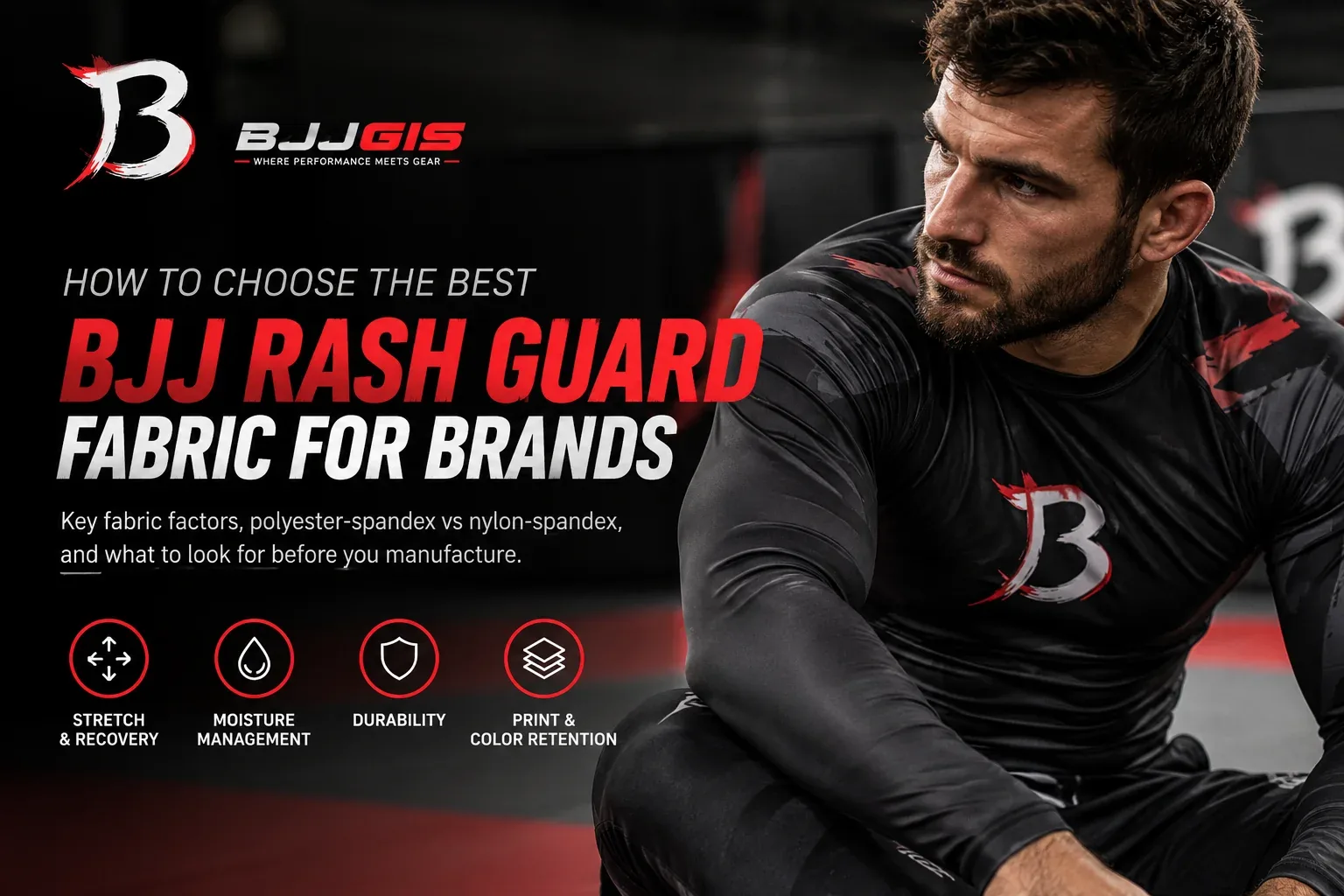
Most grappling rash guards use a synthetic knit, typically polyester or nylon blended with spandex (also called elastane) for four-way stretch. Polyester blends are widely used when full-color sublimated graphics are planned, while nylon blends are often chosen for a softer feel. Our guide to choosing BJJ rash guard fabric explains those tradeoffs for brands.
What Is a Compression Shirt?
A compression shirt is a tight, stretch top cut to sit firmly against the body. It is designed to move with you during repetitive training and to manage sweat, without loose fabric getting in the way.
What Are Compression Shirts Used For?
Compression shirts are used for weight training, running, cross-training, team sports, and as a base layer in cold weather. Some athletes wear them for recovery. Compression garments are widely marketed for muscle support and recovery, but research findings vary, and many products labeled "compression" simply describe a snug athletic fit rather than a measured level of pressure.
What Are Compression Shirts Made Of?
Compression shirts are also made from polyester-spandex or nylon-spandex knits, often in a lighter weight than grappling rash guards. Material alone doesn't tell you much. Knit structure, fabric weight, stretch recovery, and finishing determine how the shirt performs.
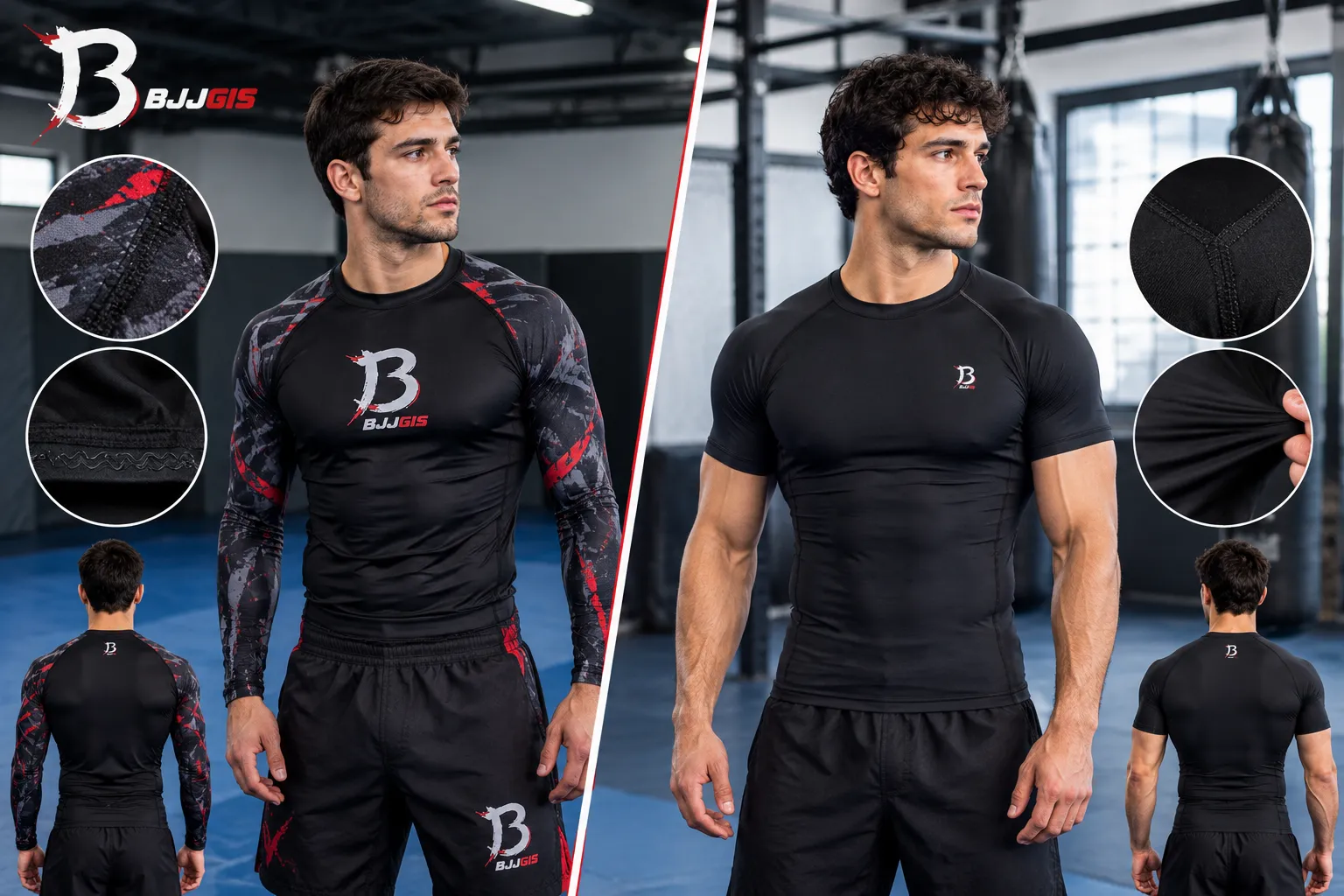
Rash Guard vs Compression Shirt: Side-by-Side Comparison
| Feature | Rash guard (grappling) | Compression shirt (general training) |
|---|---|---|
| Main purpose | Skin coverage and friction resistance during contact | Close fit and sweat management during exercise |
| Typical fabric | Polyester or nylon with spandex, usually more substantial | Polyester or nylon with spandex, often lighter |
| Seams | Usually flatlock, placed away from high-contact areas | Varies: flatlock, overlock, or bonded |
| Hem | Often longer torso and a silicone gripper hem | Standard hem; may ride up when rolling |
| Stress handling | Built for pulling, twisting, and mat contact | Built for body movement, not grips |
| Best for | No-gi BJJ, MMA ground work, wrestling | Lifting, running, conditioning |
Share your fabric, seam and sizing requirements — we will prepare a sample built for real grappling, not just a snug fit.
Request a quote →The Difference Between a Rash Guard and a Compression Shirt in Construction
The categories overlap. A well-made compression shirt can have flat seams and decent fabric, and a poorly made rash guard can fail quickly. The meaningful difference between a rash guard and a compression shirt is in four construction details.
Fabric Weight and Surface Durability
Grappling fabric is pressed into the mat, pinned under body weight, and stretched in several directions at once. Rash guard fabric is usually chosen to tolerate that abrasion and recover its shape. Compression shirt fabric is often lighter and more breathable, which suits running and lifting but may pill, snag, or stretch out under repeated grappling.
Seams and Panel Placement
Flatlock seams sit flat against the skin and reduce rubbing, so they are standard on quality rash guards. Placement matters as much as stitch type. Grappling tops often use raglan or shaped panels so seams stay off the shoulders and underarms, where friction is highest.
Torso Length and Hem Grip
A rash guard needs to stay tucked below the waistband when you bridge, invert, or get stacked. That is why many include a longer back and a silicone gripper hem. Many compression shirts are cut shorter and can ride up during rolls.
Print and Branding
Rash guards are often fully sublimated, which means the design is dyed into polyester fabric rather than printed on top. That helps graphics stretch with the garment. Brands planning artwork-heavy lines can see sublimated rash guards for examples.
BJJ Rash Guard vs Compression Shirt: Which Should You Wear?
No-Gi Training
Choose a rash guard. Frequent no-gi training involves constant grips on the fabric, mat contact, and inversions. A compression shirt may work for a first class, but it is more likely to ride up, wear out at the seams, or stretch out of shape. Pair it with spats or leggings or grappling shorts for a full no-gi kit.
Can You Wear a Compression Shirt for BJJ?
Yes, for light drilling or a trial class if your academy allows it. A good BJJ compression shirt and a basic rash guard can be very similar. Compression shirts for jiu jitsu work best when they have flat seams, a long torso, and a gripper hem; at that point, they are effectively functioning as rash guards. Some BJJ Gis compression styles are designed with grappling in mind, as shown on its compression shirts page.
Under the Gi
A thin rash guard or compression top under the gi can help manage sweat and reduce friction from the jacket. Academy dress codes vary, so ask your instructor before you assume it is allowed.
MMA and Wrestling
Choose a rash guard for any session with takedowns, clinch work, or ground fighting. For pad work or striking-only rounds, a compression shirt is usually fine if the gym permits it.
Lifting, Running, and Conditioning
A compression shirt is the more practical choice. A rash guard can still be worn, but heavier grappling fabric may feel warmer than necessary.
Competition Rules
Competitions set their own uniform rules. IBJJF no-gi rules, for example, specify a close-fitting elastic top with requirements for torso length and color, and the rules on wearing a shirt under the gi differ between men's and women's divisions. Rules change and vary by organization, so check the current rulebook for the event you are entering.
What Brands and Academies Should Consider
For a fightwear brand or academy pro shop, the rash guard vs compression shirt question is a product-development decision. Calling a gym compression shirt a "rash guard" without changing its construction usually leads to returns and complaints.
Define the End Use Before Sampling
Decide whether the product is for frequent grappling, general training, or both. That decision drives fabric, seam placement, torso length, hem finish, and sizing.
Test Checklist for Rash Guard Samples
Test a physical sample in real training before approving bulk production.
Movement Test
Wear the sample through drilling and live rounds. Check whether the hem stays down, whether seams rub, and whether the collar and sleeves stay comfortable when the top is gripped.
Wash and Recovery Check
Wash the sample several times following your care instructions. Then compare fit, stretch recovery, and print quality with an unwashed sample.
Keep Product Claims Accurate
Avoid unsupported claims about infection prevention, circulation, or UV protection. Rash guards add a layer of coverage but don't replace good hygiene: washing gear after every session, showering after training, and following academy hygiene policies. UPF ratings should be printed only when supported by fabric testing.
Academy and Team Programs
Academies usually standardize on one rash guard style with a few sleeve options and rank colors. For sleeve decisions, see our short vs long sleeve rash guard guide for teams, and for team orders, club rash guards.
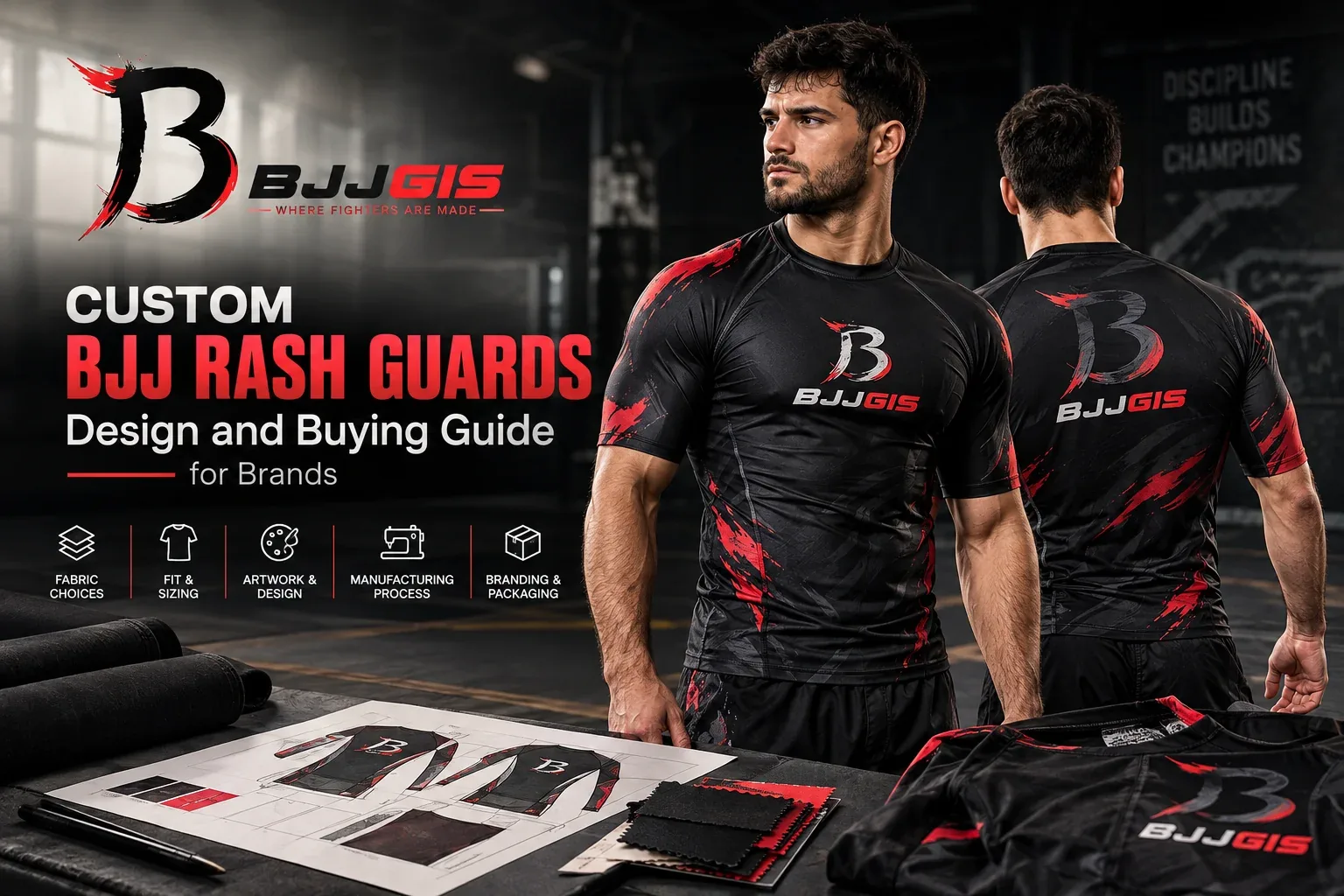
BJJ Gis manufactures rash guards and compression wear in Sialkot, Pakistan, supplying academies and brands in the United States and worldwide. Brands developing their own line can work with a rash guard manufacturer on fabric, fit, and sublimation, or build a broader private label BJJ gear range. Our custom BJJ rash guard design and buying guide covers artwork and ordering in more detail.
Final Thoughts
The difference between a rash guard and a compression shirt isn't how tight it feels; it is what the garment is built to withstand. For no-gi BJJ, MMA ground work, and wrestling, a purpose-built rash guard with flat seams, a long torso, and a gripper hem is the better choice. For lifting, running, and conditioning, a compression shirt does the job.
For brands and academies, define the end use first, test samples in real training, and keep product claims accurate.
Planning a rash guard or compression line for your academy or brand? Request a quote from BJJ Gis with your fabric, sleeve, and artwork requirements, or message our team on WhatsApp to discuss samples and sizing.