An academy logo can look sharp on a screen and still turn into a blurry, stiff badge once it is stitched onto a heavy gi. Choosing between woven, embroidered, and PVC patches comes down to three things: how much detail your artwork has, where the patch will sit, and how it will be washed and gripped.
This guide compares woven vs embroidered vs PVC patches for BJJ gis, team gear, and merchandise, with practical advice for academy owners and fightwear brands ordering custom patches in the United States and worldwide.
Quick Answer: Woven vs Embroidered vs PVC Patches
If you only need the short version, here it is.
| Feature | Embroidered | Woven | PVC |
|---|---|---|---|
| How it's made | Thread stitched onto a fabric base | Thin threads woven on a loom | Soft PVC molded into shape |
| Look | Raised, textured, traditional | Flat, smooth, crisp | Glossy, solid colors, can be 2D or 3D |
| Fine detail and small text | Limited | Strong | Good, within mold limits |
| Feel on a gi | Thicker, firmer | Thin and flexible | Rigid compared with fabric |
| Best for | Bold academy logos, back and shoulder patches | Detailed crests, rank and name patches, labels | Gi bags, hats, hoodies, backpacks |
For most gi patches, the real decision is woven vs embroidered. PVC is usually better suited to bags and merchandise than to the gi itself.
How Each Patch Type Is Made
Embroidered Patches
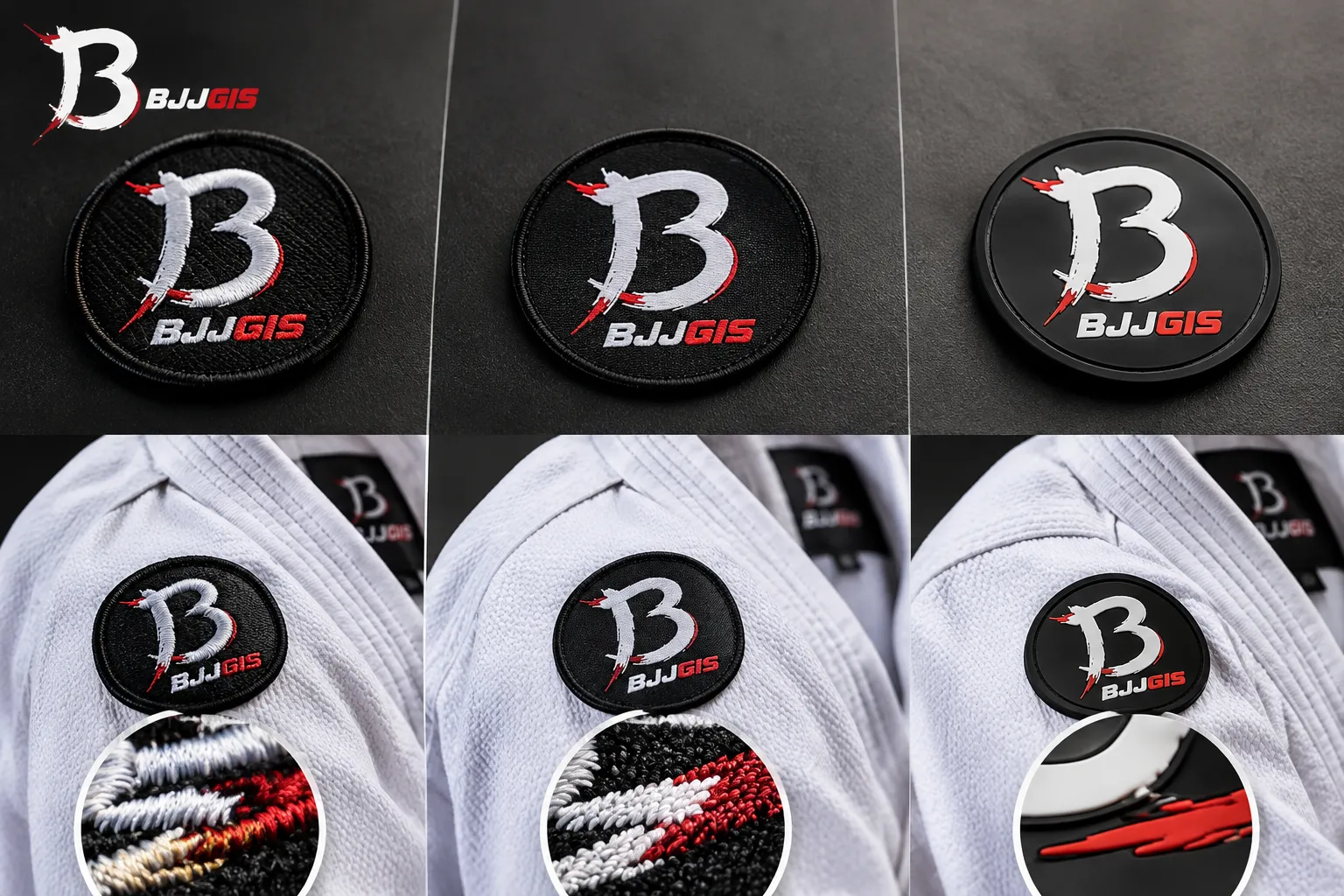
Embroidered patches are built by stitching thread onto a twill or similar fabric base, usually finished with a stitched border. The thread sits on top of the base, which creates the raised, tactile look many academies associate with a "proper" gi patch. Embroidery reads well from across the mat, especially for bold shapes and short text.
If you want embroidery without a separate patch, direct gi embroidery stitches the logo straight into the jacket. That avoids patch edges altogether, but it has to be planned before the gi is assembled. Many academies combine custom patches and embroidery on the same gi, for example a woven shoulder patch with embroidered lapel text.
Woven Patches
Woven patches are made on a loom, much like clothing labels. The design is woven into the patch with thinner threads instead of stitched on top, so the surface is flatter and fine lines stay sharper. BJJ Gis offers custom woven patches and cloth badges, and its site lists name tapes and laser-cut edges among the options.
PVC Patches
PVC patches are molded rather than stitched. Liquid PVC is filled into a custom mold in layers of color and cured into a soft, rubbery badge. The result is water-resistant, easy to wipe clean, and capable of raised 3D details. Because each design needs a mold, setup is usually a larger part of the cost than with fabric patches.
Woven vs Embroidered Patches: The Difference That Matters Most
The difference between woven and embroidered patches shows up in four areas.
Detail and Small Text
Embroidery thread is relatively thick, so small letters, thin lines, and tight gaps can fill in or blur. Woven construction handles small text, lineage details, and intricate crests far better. If your academy logo includes a motto, a city name, or fine linework, woven is usually the safer choice.
Thickness and Feel on the Mat
An embroidered patch adds more thickness and stiffness to the area it covers, which can be noticeable on a large back patch. A woven patch sits closer to the fabric and moves more easily with the gi. For high-movement areas or lighter competition gis, many brands prefer woven for that reason.
Look and Perceived Value
Embroidery has a classic, textured look that many students and coaches like on a traditional gi. Woven patches look cleaner and more modern. Neither is "better"; it depends on your brand style and how the patch looks next to your other branding.
Cost Drivers
Pricing depends on the supplier, but the drivers are predictable. Embroidery cost is influenced by patch size and how much of the surface is stitched. Woven pricing is affected by size, number of colors, and quantity. Ask for quotes on the same artwork in both styles before deciding.
Embroidered Patch vs Woven Patch: A Simple Rule of Thumb
Look at your logo at the size it will be produced. If it is bold, simple, and has little text, an embroidered patch will give it depth and presence. If it relies on fine lines, small lettering, or many details, a woven patch will keep it readable. When the answer isn't obvious, sample both. An embroidered vs woven patch side by side on the same gi usually settles the decision quickly.
PVC vs Embroidered Patches: Where Rubber Makes Sense
Strengths of PVC
PVC patches handle moisture and grime well, hold bright solid colors, and can be wiped clean. They suit gear that is exposed to sweat and handling but isn't gripped by training partners.
Why PVC Is Usually a Poor Fit for the Gi
A gi gets gripped, pulled, and washed constantly. A rigid PVC patch doesn't flex like the fabric around it, can feel hard against training partners, and generally shouldn't be exposed to the heat of ironing or high-temperature drying. It also can't be applied with a standard iron-on backing.
Check Competition and Academy Rules
Federations such as the IBJJF regulate where patches can go on a gi, and their rules may also address patch materials. Rules change, so check the current rulebook before putting any patch, especially a non-fabric one, on a competition gi. Many academies also have their own uniform policies.
Where PVC Works Well
PVC is a strong option for gi bags, hats, backpacks, and hook-and-loop morale-style patches for team merch. For team hoodies and outerwear, embroidered or woven patches tend to suit the fabric better, though PVC can work on custom BJJ and MMA hoodies when a bold, rubberized look is the goal.
Share your artwork, sizes and quantities — we will recommend woven, embroidered or PVC and prepare a sample for approval.
Request a quote →Choosing the Right Patch for Each BJJ Product
Gi Back, Shoulder, and Chest Patches
For a large back patch with a bold logo, embroidered or woven both work; choose woven if the design has fine detail or you want a lighter feel. For shoulders and chest, woven is often the better fit for detailed crests, while embroidery suits simple, high-contrast marks. Plan positions before ordering; our guide to designing your own jiu jitsu gi includes a patch layout step.
Academy Patches, Rank Badges, and Name Tapes
An academy patch is often ordered in volume and reordered for years, so consistency matters more than novelty. Woven patches are well suited to rank badges and name tapes because they keep small text readable. For academies supplying matching team gis, it helps to order patches alongside the uniforms so colors and sizes are approved together.
Rash Guards and No-Gi Gear
Patches rarely make sense on stretch fabrics. Sewing a patch onto a rash guard restricts stretch and creates a stiff spot. Sublimation design or screen printing is usually a better route, and our custom rash guard design and buying guide covers those options.
Labels and Packaging
Woven construction is also used for neck labels and brand tags. If you are building a retail line, coordinate patch colors with your labels and packaging so the product looks consistent.
Backing Options and How Patches Are Attached
Sew-On
Sewing is the most secure method for gis. It holds up to gripping and repeated washing, and it is the usual choice for academy uniforms.
Iron-On and Heat-Seal
Heat-applied backings are convenient for retail customers applying patches at home. On a gi that is washed after every session, adhesive alone may loosen over time, so many academies add stitching around the edge.
Hook-and-Loop
Hook-and-loop backing lets teams swap patches on bags and jackets. It is less common on the gi itself because the hook side can snag fabric and catch on training partners.
How to Order BJJ Custom Patches for an Academy or Brand
Prepare Your Artwork
Send vector files when possible, along with your brand colors and the intended patch size.
Size and Detail Check
Decide the finished size first, because the same logo can work at back-patch size and fail at shoulder size.
Test at Actual Size
Print the logo at its real dimensions and look at it from a few feet away. If text is hard to read on paper, it will be harder to read in thread.
Simplify Before You Sample
Remove thin outlines, tiny taglines, and gradients that the chosen patch type can't reproduce. A simplified version often looks stronger on the mat.
Sample, Wash, and Approve
Request a physical sample, sew it onto a gi, and wash it following your normal care routine. Check edges, color, and flatness before approving bulk production.
Plan Quantities and Reorders
Keep your approved sample and artwork file for reorders so later batches match. BJJ Gis manufactures in Sialkot, Pakistan, and produces custom gi patches alongside gis and team gear for academies and brands in the United States and worldwide. Brands launching a private label BJJ line can coordinate patches, labels, and garments with one supplier, and academies can do the same through a uniform program.
Final Thoughts
For BJJ gear, the choice usually comes down to woven or embroidered. Pick embroidered when you want a bold, raised, classic look and the logo is simple. Pick woven when detail, small text, or a lighter feel matters. Keep PVC for gi bags, hats, and merchandise where flexibility and grip contact aren't an issue.
Whichever you choose, test a sample at its real size, sew it onto a gi, and wash it before approving production.
Ready to price patches for your academy or brand? Request a quote from BJJ Gis with your artwork, sizes, and quantities, or message our team on WhatsApp to discuss patch types, backings, and samples.