Spats are one of the first pieces of no-gi gear most people buy after a rash guard, usually right after a dry mat takes some skin off their knees. But not every pair of tights is built for grappling, and full-length spats aren't the only option.
This guide explains what Brazilian jiu jitsu spats are, how they differ from regular leggings, when compression shorts make more sense, and how to judge fabric and fit. It also covers what academies and fightwear brands should check when developing their own spats.
What Are BJJ Spats?
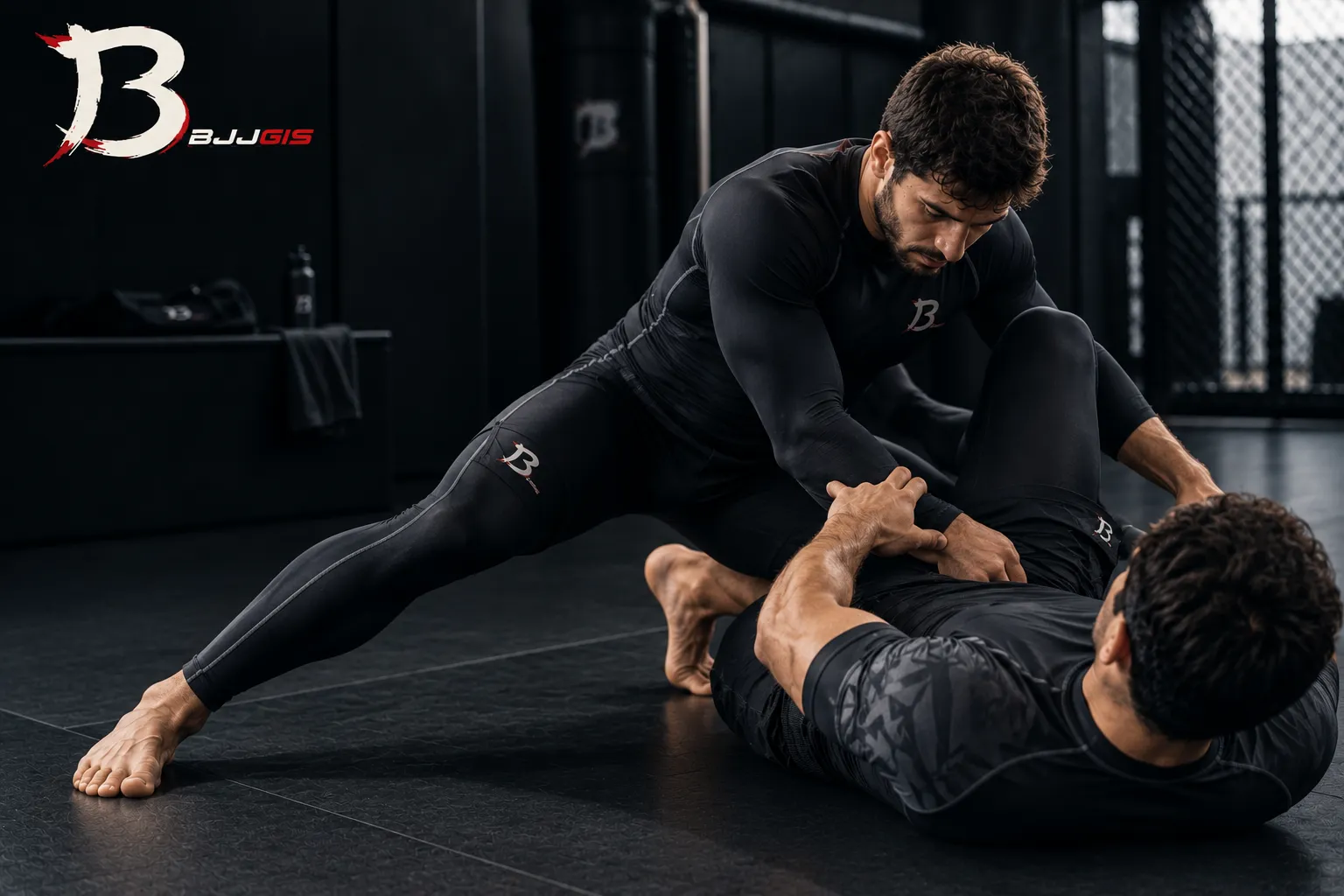
BJJ spats are close-fitting compression tights made for grappling. They are usually worn under grappling shorts for no-gi training, and some people wear them under gi pants as a base layer. Most run from the waist to the ankle, though shorter cuts exist.
The term "spats" comes from wrestling and grappling culture rather than the old-fashioned ankle covers of the same name. In practice, spats for jiu jitsu and compression pants are close relatives: both are stretch tights, but BJJ-specific pairs are built around mat contact and grappling movement.
BJJ Spats vs Regular Leggings and Running Tights
Running tights and gym leggings can look the same, but they are designed for repetitive, forward movement, not for being dragged across a mat or pinned under a training partner. The main differences:
- Fabric: grappling spats usually use a more substantial stretch knit that resists abrasion and stays opaque when stretched.
- Seams: flatlock seams and reinforced crotch areas are common on jiu jitsu spats; fitness tights may use lighter construction.
- Hardware: BJJ spats shouldn't have zippers, pockets, reflective clips, or mesh panels that can catch fingers and toes.
- Waistband: grappling spats often add an internal drawcord or grip to stay up during inversions.
Regular tights can work for a trial class, but they tend to wear out faster on the mats.
Why Grapplers Wear Spats
People wear spats for practical reasons rather than technique:
- Coverage: spats put a layer between your legs and the mat or your partner, which reduces direct skin contact and mat burn on the knees and shins.
- Comfort with sweat: many partners appreciate a covered leg during triangles and leg entanglements.
- Warmth: spats keep legs warmer in cold gyms and early sessions.
- Layering: they stop outer shorts from twisting and add coverage during inversions.
Spats don't replace hygiene. Coverage helps, but clean gear, showering after training, covering cuts, and following your academy's hygiene policy do the main work. Compression wear is also widely marketed for recovery and circulation, but research findings vary, so treat any such claims cautiously.
Types of Jiu Jitsu Spats
Full-Length Spats
The standard style, running from waist to ankle. Full-length spats give the most coverage and are the usual choice for no-gi players who spend a lot of time on their knees or in leg entanglements. Most no-gi BJJ spats sold for training fall into this category.
3/4 Spats
Three-quarter spats stop at mid-calf. They avoid fabric bunching at the ankle and feel slightly cooler, while still covering the knees.
Compression Shorts (Spats Shorts)
Compression shorts, sometimes called spats shorts or vale tudo shorts, stop around mid-thigh or just above the knee. They cover the hips and upper thighs but leave knees and shins exposed. They are also easier to wear with bulky knee sleeves or braces.
Shorts With a Built-In Liner
Some grappling shorts include an attached compression liner. They combine outer shorts and base layer in one garment, which is convenient but offers less coverage than full-length spats.
Compression Spats vs Shorts: Which Should You Wear?
| Features | Full-length spats | Compression shorts |
|---|---|---|
| Coverage | Waist to ankle | Waist to mid-thigh or knee |
| Mat burn on knees and shins | Covered | Exposed |
| Heat | Warmer | Cooler |
| Fabric around lower legs | More | Less |
| Knee sleeves or braces | Can be harder to fit | Easier |
| Best for | Cold gyms, leg-heavy games, maximum coverage | Hot gyms, wrestling-heavy sessions, minimal fabric |
When Spats Make Sense
Choose full-length spats if you get mat burn on your knees and shins, train in a cold room, play a lot of leg entanglement or knee-heavy guard, or simply want more coverage against the mat and your partners.
When Compression Shorts Make Sense
Choose compression shorts if your gym runs hot, you wear knee sleeves, or you prefer less fabric around the lower leg during scrambles and leg entries.
Spats Alone or Under Shorts?
This depends on the academy. Some gyms are fine with spats and a rash guard alone; others expect shorts over spats, particularly for men. When you are unsure, wear grappling shorts over them until you know the room's norms.
What Are BJJ Spats Made Of?
Polyester-Spandex vs Nylon-Spandex
Most BJJ spats are a polyester or nylon knit blended with spandex (elastane) for four-way stretch. Polyester blends are common when full-color sublimated prints are planned and tend to dry quickly. Nylon blends are often chosen for a softer, smoother feel. The same tradeoffs apply to rash guards, as explained in our BJJ rash guard fabric guide.
Opacity
Spats get stretched hardest at the seat and knees. Fabric that is too thin or overstretched can turn sheer during squats and inversions. Test a pair in a deep squat under good light before training in them.
Prints and Sublimation
Patterned spats are usually sublimated, which means the design is dyed into polyester fabric and stretches with it rather than sitting on top. Plain black spats remain the most practical choice for academies and competition, where color rules may apply.
How BJJ Spats Should Fit
Sizing
Spats should be snug from waist to ankle without restricting a deep squat or causing numbness. Size charts vary widely between brands, so use the waist and hip measurements rather than your usual pants size. If you are between sizes, the larger size may be less likely to turn sheer when stretched.
Waistband
A wide waistband with an internal drawcord or inner grip stays put better during inversions and scrambles. A thin elastic waist tends to roll down.
Seams and Crotch Construction
Look for flatlock seams and a reinforced crotch, often with a gusset that spreads stress and allows deeper hip movement. A thick seam running down the inner thigh will rub during guard work.
Ankle Cuffs
The cuff should stay at the ankle without riding up or bunching. 3/4 spats avoid that issue entirely.
Mens BJJ Spats vs Women's Spats
Mens BJJ spats and women's spats differ in rise, hip shape, and waist-to-hip ratio. A unisex pattern can sag at the seat or dig in at the waist depending on body shape, so brands increasingly offer separate cuts. Women's spats are often cut with a higher rise and a contoured waistband.
Share your styles, sizes and artwork — we will prepare a sample built for real no-gi training.
Request a quote →Competition Considerations
Competitions set their own rules on spats, shorts over spats, colors, and logos, and those rules can differ between men's and women's divisions. Check the current rulebook for your event. For training, follow your academy's dress code.
Common Mistakes When Buying Spats
- Buying running tights for grappling. They often wear through at the knees and may turn sheer when stretched.
- Sizing down for "more compression." Overly tight spats can restrict deep squats and stretch the fabric thin at the seat.
- Ignoring the waistband. A thin elastic waist rolls down during inversions; look for a drawcord or grip.
- Choosing loud prints for every situation. Printed spats are fun for training, but academies and competitions may require plain colors.
- Owning only one pair. If you train several times a week, a rotation lets each pair be washed and fully dried.
Caring for Spats
Wash spats after every session in cold water, inside out, without fabric softener, and hang dry. High dryer heat can wear out spandex and weaken prints. Our guide to washing a BJJ gi covers the same habits for gear in general.
For Brands and Academies: Developing Custom BJJ Spats
Decide the Range
Choose which lengths you will offer (full-length, 3/4, or compression shorts), whether you need separate men's and women's cuts, and whether the line is plain, ranked, or fully printed. Spats are usually sold alongside rash guards and shorts as a matching no-gi set.
Sample Before Bulk Production
What to Check
Check opacity, waistband security, seam comfort, crotch construction, and print alignment across the seams.
Squat and Roll Test
Wear the sample through deep squats under bright light, then through drilling and live rounds. Note any sheerness, slipping, or rubbing.
Record Approved Specs
Document the approved fabric, length, waistband, and measurements for each size so reorders match.
Manufacturing and Branding
BJJ Gis manufactures spats in Sialkot, Pakistan, supplying academies and brands in the United States and worldwide. Its BJJ spats and grappling leggings and compression pants pages show the options for custom lines. Brands can add sublimated designs, develop a full private label BJJ gear range, or source a complete no-gi set through a no-gi gear manufacturer.
Final Thoughts
BJJ spats add coverage, reduce mat burn, and keep legs warm, but they only work well when the fabric stays opaque, the waistband stays up, and the seams stay out of the way. Choose full-length spats for coverage and cold gyms, compression shorts for heat and less fabric, and follow your academy's rules on wearing shorts over them.
For brands and academies, plan your lengths and cuts, test samples in real training, and record approved specs for consistent reorders.
Planning custom spats or a matching no-gi set? Request a quote from BJJ Gis with your styles, sizes, and artwork, or message our team on WhatsApp to discuss samples and fabric options.