Most people find out their shorts are wrong halfway through their first no-gi round: the waistband slips, the legs bunch at the hips, or a seam starts to give at the crotch. BJJ shorts look simple, but the details decide whether they disappear during a roll or become a distraction.
This guide explains how to choose Brazilian jiu jitsu shorts for no-gi training: the main types, the features that matter, how to match shorts to your training style, and what academies and fightwear brands should check when developing their own line.
What Makes BJJ Shorts Different From Regular Athletic Shorts
Basketball, running, and board shorts aren't built for grappling. They often have pockets that catch fingers and toes, loose legs that bunch during guard work, and seams that weren't designed for repeated stretching across the hips. Some also have metal grommets or zippers that can scratch training partners.
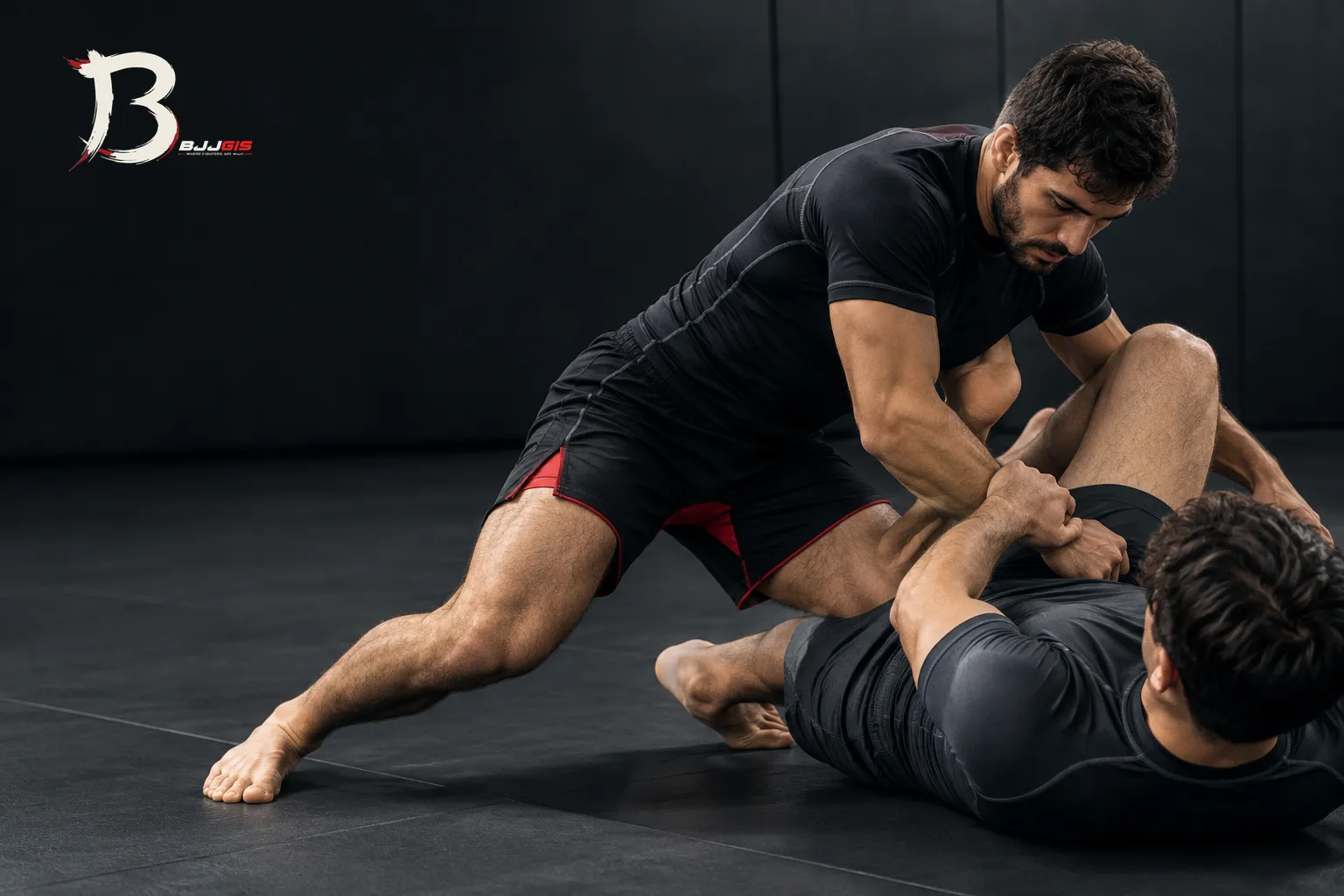
Shorts for BJJ are designed around a different set of movements: inverting, shrimping, framing with the knees, and scrambling back to your feet. That is why good no-gi BJJ shorts use stretch fabric or stretch panels, a secure waist, reinforced stress points, and a cut that keeps fabric out of the way.
Types of Shorts for BJJ
Most no-gi jiu jitsu shorts fall into one of three styles, plus the base layers worn underneath.
Grappling Shorts
Jiu jitsu grappling shorts are the standard choice for no-gi training. They are usually cut to mid-thigh or just above the knee, with a fitted but not tight leg and stretch built into the fabric or crotch panel. Most have no pockets and a low-profile waist. You can see construction examples on the BJJ Gis grappling shorts page.
Fight Shorts (MMA Style)
Fight shorts are longer and roomier, often with deep side slits for kicks and knees. They work well for MMA and for grapplers who prefer more coverage or a looser feel. The tradeoff is more fabric for a training partner to catch on, so many BJJ players prefer a slimmer cut. Brands developing this style can see the custom MMA shorts page.
Vale Tudo and Compression Shorts
Vale tudo shorts are short and tight, closer to compression shorts than board shorts. They leave nothing to grab and suit athletes who want minimal fabric. Many grapplers find them too revealing on their own and prefer them as a base layer.
Liners and Spats Under Shorts
Many grapplers wear compression shorts or spats under looser shorts. A base layer reduces chafing on the inner thigh, keeps the outer shorts from twisting, and adds coverage during inversions. Some shorts come with a built-in liner; others are designed to be worn over separate spats.
How to Choose No-Gi BJJ Shorts: Features to Check
Length and Inseam
Length is mostly personal preference within your academy's rules. Shorter cuts keep fabric away from the knees for leg entries and guard work. Longer cuts add coverage and are common in MMA. Shorts that bunch behind the knee when you sit in guard are usually too long for grappling. If you plan to compete, check the length rules for your event.
Fabric and Stretch
Look for synthetic fabric that dries quickly and stretches with you. Common options include polyester with spandex, which gives four-way stretch, and lightweight ripstop or woven polyester bodies paired with stretch panels. Avoid cotton for no-gi; it holds sweat and gets heavy. The blend percentage matters less than how the fabric recovers after stretching and how it feels during a roll.
Crotch Gusset and Side Vents
The crotch is the most common failure point on cheap shorts. A gusset, an extra panel of fabric, often stretch fabric, sewn into the crotch, spreads stress across a wider area and allows deeper hip movement. Side vents or slits add room for wide stances and kicks, but they should be reinforced at the top so they don't tear further.
Waistband and Closure
The waistband needs to stay put while you are upside down. Most grappling shorts use a drawstring, a hook-and-loop closure, or both. An internal drawstring that can be tucked away is the most common choice for BJJ. An inner silicone grip strip can help prevent the waist from sliding.
Hook-and-Loop Closures
Hook-and-loop (Velcro-style) closures are quick to adjust and common on fight shorts. On grappling shorts, the hook side should be fully covered when closed so it can't scrape skin or catch on a rash guard.
Partner Safety Details
Avoid exposed zippers, metal grommets, rivets, and pockets. Anything hard or open can scratch a partner or catch fingers and toes. Many academies don't allow shorts with these features on the mats.
Seams and Reinforcement
Flatlock seams reduce rubbing against the skin, and bartack stitching at stress points (crotch, vent tops, and waistband ends) adds strength where shorts usually fail first. Turn a pair inside out before buying: smooth, even stitching is a good sign.
Fit and Sizing
Mens BJJ shorts and women's cuts differ in rise, hip shape, and leg opening, so a unisex pattern doesn't fit everyone equally well. Sizing also varies widely between brands; check the waist and hip measurements rather than relying on the size label. The shorts should let you squat deeply and pull a knee to your chest without the waist dropping or the hem riding up sharply.
Print and Branding
Most BJJ shorts with full graphics are sublimated, which means the design is dyed into polyester fabric and stretches with it. Simpler logos can be screen printed or embroidered. Large raised prints or heavy embroidery on the inner thigh can feel stiff against a partner.
Choosing Jiu Jitsu Shorts by Training Style
No-Gi BJJ and Submission Grappling
Choose fitted grappling shorts with a gusset, a secure internal closure, and no pockets, ideally with a compression layer underneath. Pair them with a rash guard built for mat contact; our rash guard vs compression shirt guide explains the difference.
MMA and Wrestling-Style Training
Fight shorts with reinforced side slits suit kicks and wide stances. If your sessions include a lot of ground work, a slimmer cut gives partners less fabric to grab.
Competition
Competitions set their own rules on shorts length, color, pockets, and closures, and those rules vary between organizations and change over time. Check the current rulebook for your event before buying competition shorts, and don't assume a "competition" label means they meet every federation's requirements.
Share your styles, sizes and artwork — we will prepare a sample built for real no-gi training.
Request a quote →Quick Checklist for Choosing BJJ Shorts
| Feature | What to look for | Red flag |
|---|---|---|
| Fabric | Quick-drying synthetic with stretch or stretch panels | Cotton, no stretch |
| Crotch | Gusset with reinforced stitching | Single seam meeting at one point |
| Waist | Internal drawstring, covered hook-and-loop, grip strip | Exposed Velcro, thin elastic only |
| Length | Clears the knee in guard | Bunches behind the knee |
| Seams | Flatlock, bartacks at stress points | Thick raised seams on inner thigh |
| Hardware | None | Zippers, grommets, pockets |
| Fit | Allows deep squat without slipping | Waist drops or legs ride up |
Caring for BJJ Shorts
Wash shorts after every session in cold water, close hook-and-loop fasteners first, skip fabric softener, and hang dry. High dryer heat can wear out stretch fibers and weaken prints. Many of the same habits from our guide to washing a BJJ gi apply to no-gi gear.
For Brands and Academies: Developing Custom BJJ Shorts
Shorts are one of the easiest products for an academy pro shop or new fightwear brand to add, but small pattern choices affect returns and reviews.
Plan the Size Run
Decide whether you need men's, women's, and youth cuts, and how many sizes per style. Women's and youth shorts usually need their own patterns, not just a smaller version of the men's shorts.
Sample and Test Before Bulk
Ask for a physical sample of each cut and test it in real training.
What to Check on a Sample
Check the gusset, waistband security, seam comfort, vent reinforcement, and print quality.
Scramble Test
Wear the sample through drilling and several live rounds. Note whether the waist slips, the legs bunch, or any seam rubs.
Record Approved Specs
Write down the approved fabric, length, closure type, and measurements for each size. That record keeps reorders consistent.
Branding, Labels, and Supply
BJJ Gis manufactures no-gi shorts in Sialkot, Pakistan, supplying academies and brands in the United States and worldwide. Brands can develop shorts through a private label BJJ gear program, add sublimated designs, and finish with custom labels and packaging. Clubs ordering team kits can coordinate shorts with rash guards through a club and team gear program, or see the full no-gi wear range.
Final Thoughts
Good BJJ shorts are the ones you stop noticing. Look for stretch fabric, a reinforced gusset, a secure internal closure, flat seams, and no pockets or exposed hardware. Choose a length that stays clear of your knees in guard, and add a compression layer if you want extra coverage and less chafing.
For brands and academies, plan the size run, test samples in live training, and record approved specs so every reorder matches.
Planning custom BJJ shorts for your academy or brand? Request a quote from BJJ Gis with your styles, sizes, and artwork, or message our team on WhatsApp to discuss samples and fabric options.