Two gis can look identical in product photos and behave completely differently after three months of training. One keeps its collar shape and fit; the other loses a sleeve length in the wash and starts fraying at the knees. The difference usually isn't the logo. It is construction, consistency, and how honestly the brand describes its product.
This guide explains what separates a great BJJ gi brand from an average one, how to judge gi quality before you buy, and what it takes to build a gi brand that customers trust. It is written for academy owners, retailers, and anyone planning to launch their own line.
What Separates Great BJJ Gi Brands From the Rest
Strong jiu jitsu gi brands reduce the buyer's risk. They make it easy to choose the right size, understand what the gi is made of, care for it properly, and get help if something goes wrong. Price, athlete sponsorships, and design matter, but they don't replace those basics.
| Quality signal | What a strong brand provides | Red flag |
|---|---|---|
| Construction | Specific details on weave, collar, stitching, and reinforcement | Only vague "premium quality" language |
| Fit system | Size chart with height and weight ranges, plus long, heavy, women's, and kids' options | A size dropdown with no measurements |
| Shrinkage and care | Clear notes on pre-shrinking, washing, and drying | No care guidance for a cotton gi |
| Competition claims | Product-specific statements that can be checked against current rules | "Competition legal" applied to everything |
| Consistency | The same fit and color across reorders | Sizes or colors that change from batch to batch |
| Support | Visible return, exchange, and restock information | Policies hidden until after checkout |
How to Judge a Jiu Jitsu Gi's Construction Quality
Most quality signals can be checked by hand or in good product photos.
Fabric and Weave Matched to the Use
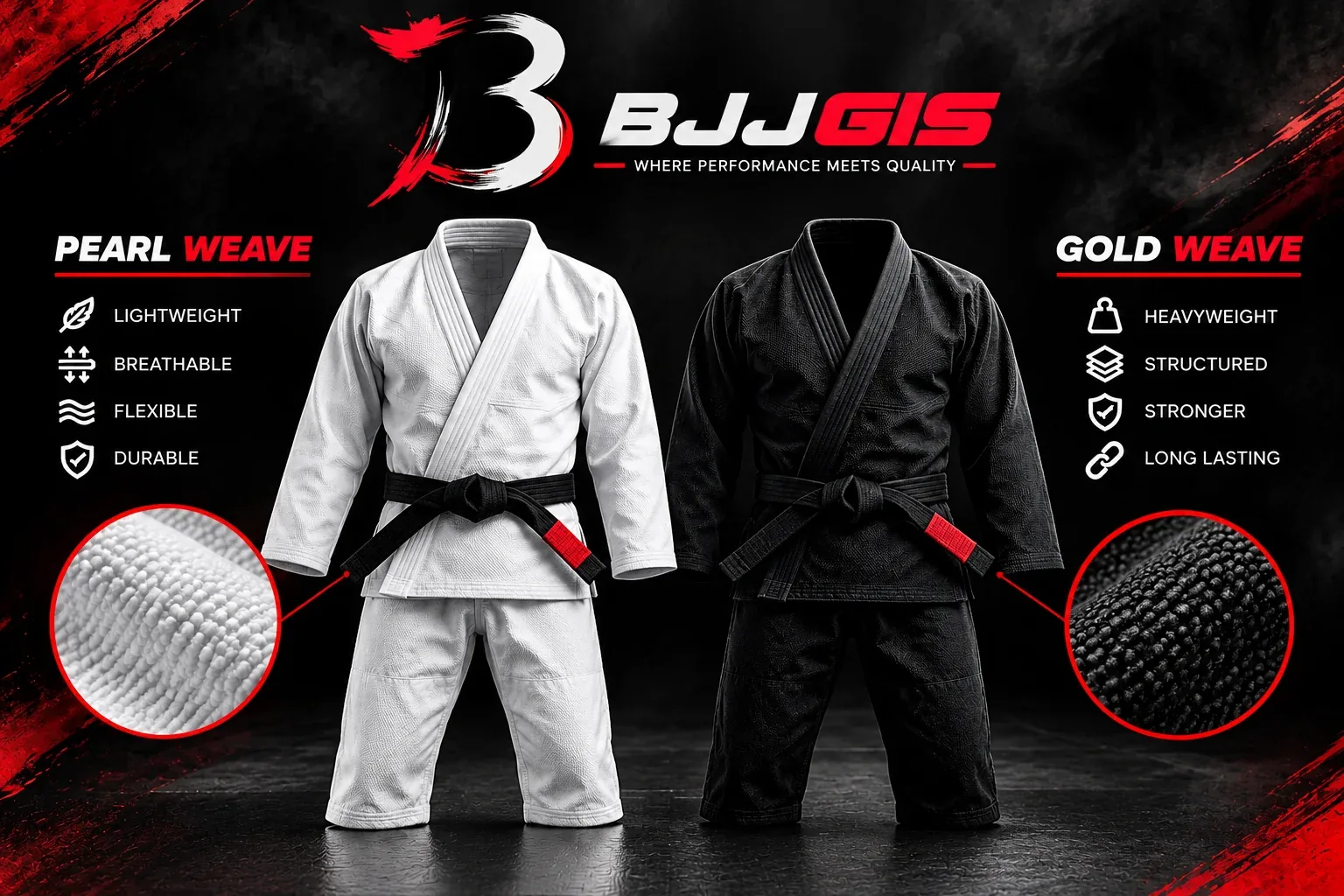
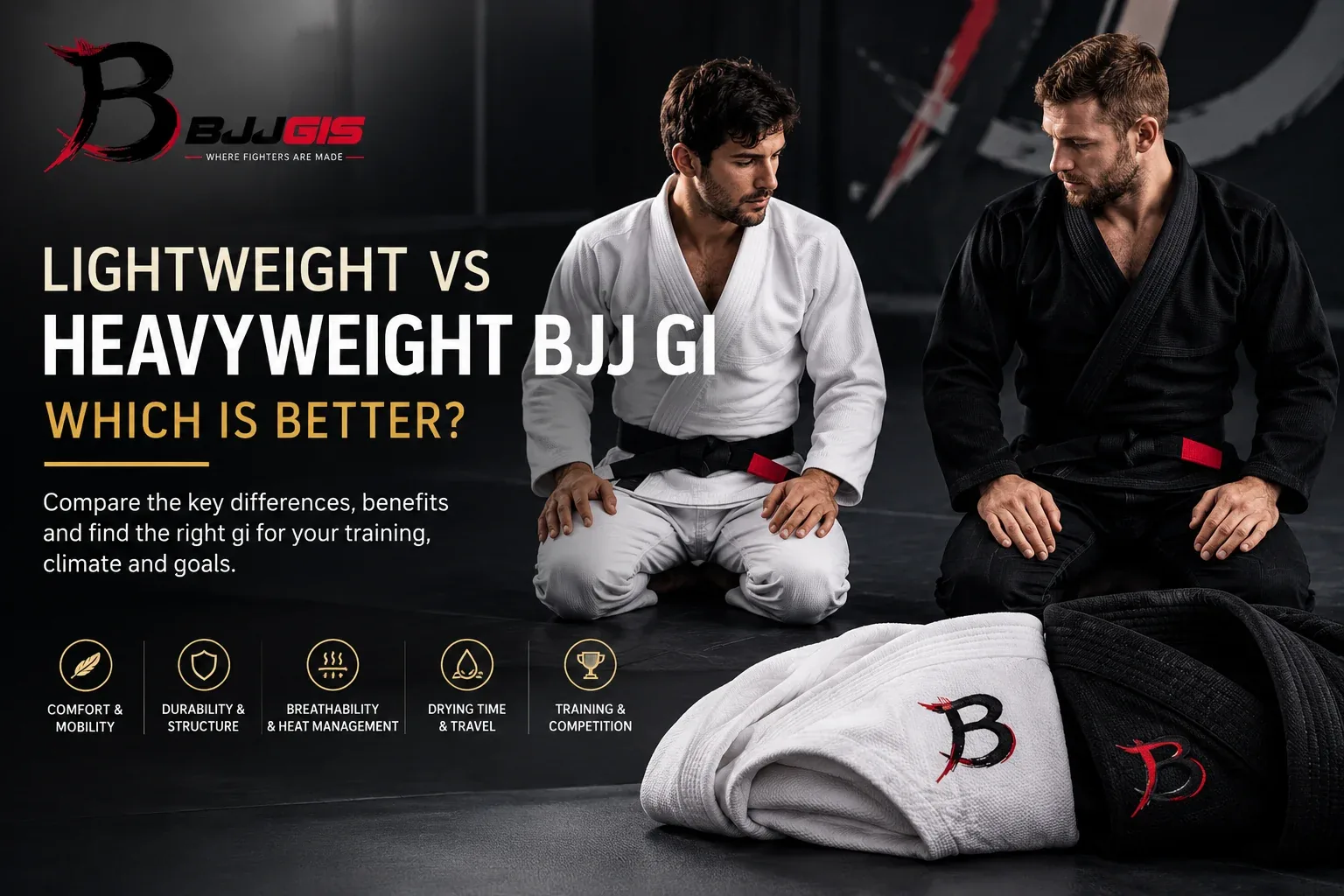
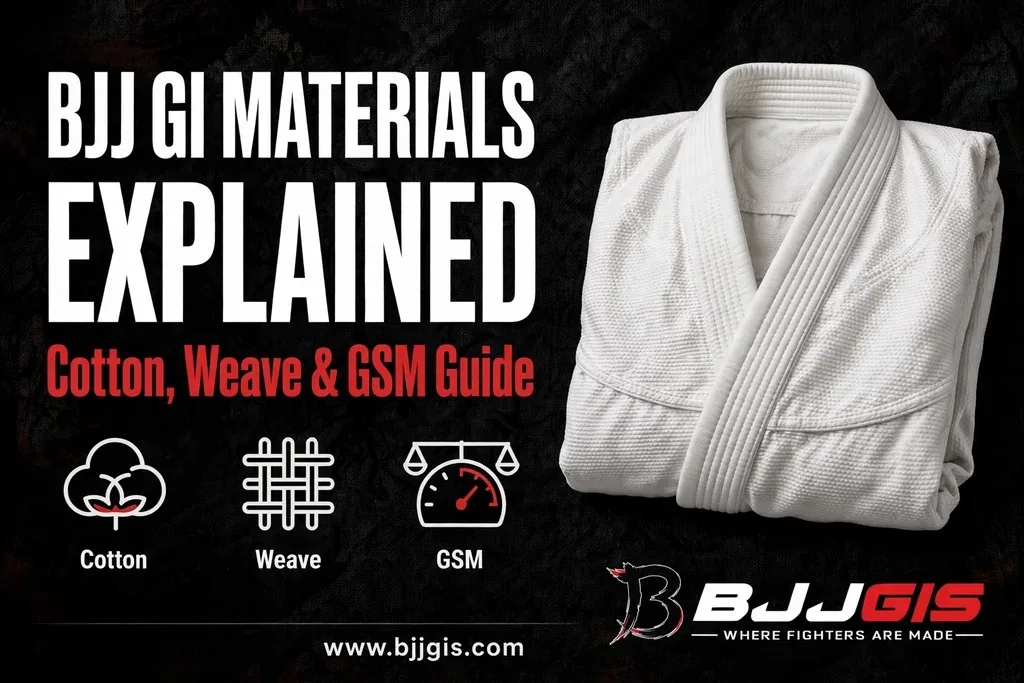
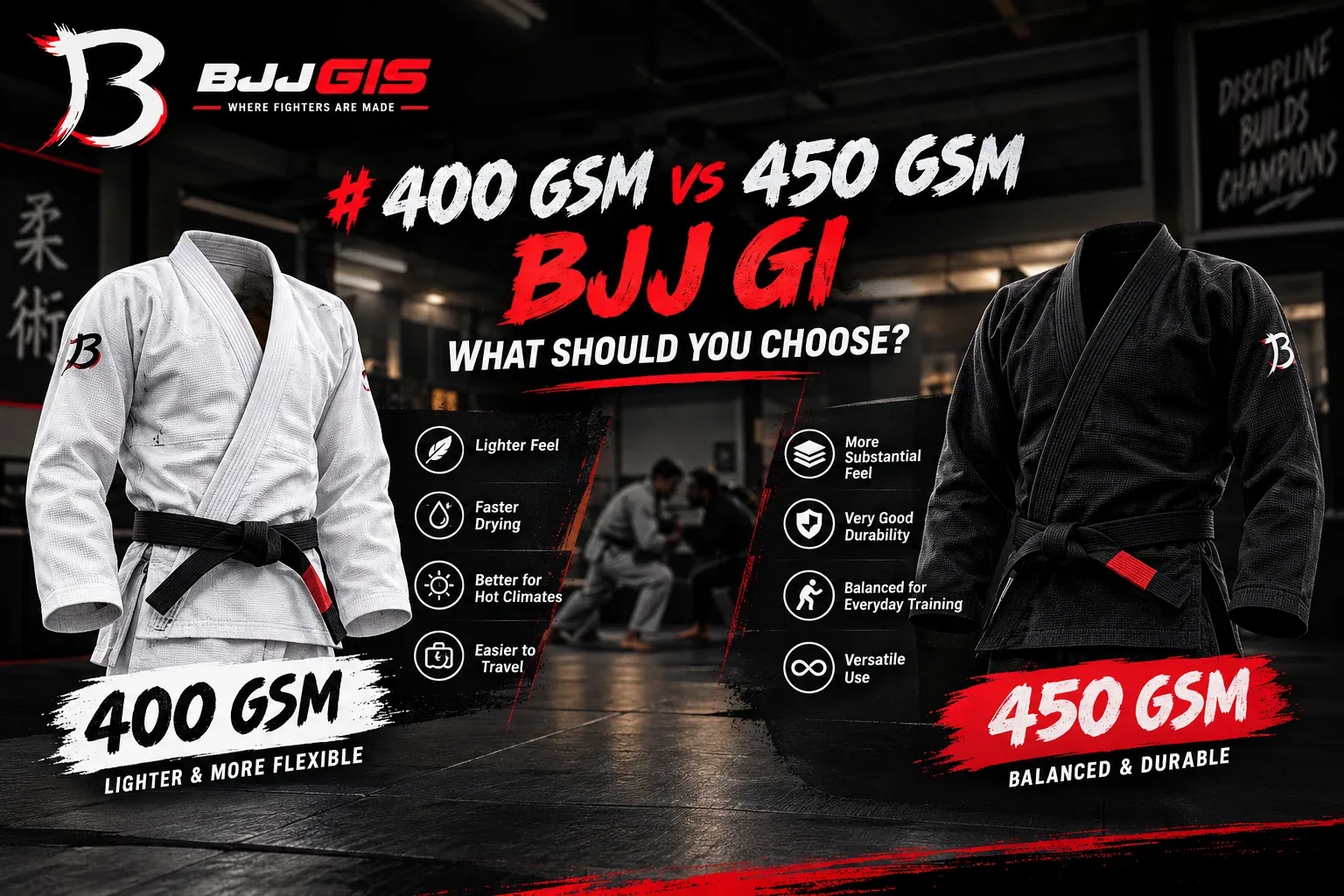
Better fabric doesn't simply mean heavier fabric. A great brand chooses the weave and weight for a purpose: pearl weave for an all-round training gi, a lighter weave for hot gyms and travel, a denser weave for durability. Our BJJ gi materials guide to cotton, weave, and GSM and pearl weave vs gold weave comparison explain those options in detail.
Collar and Lapel
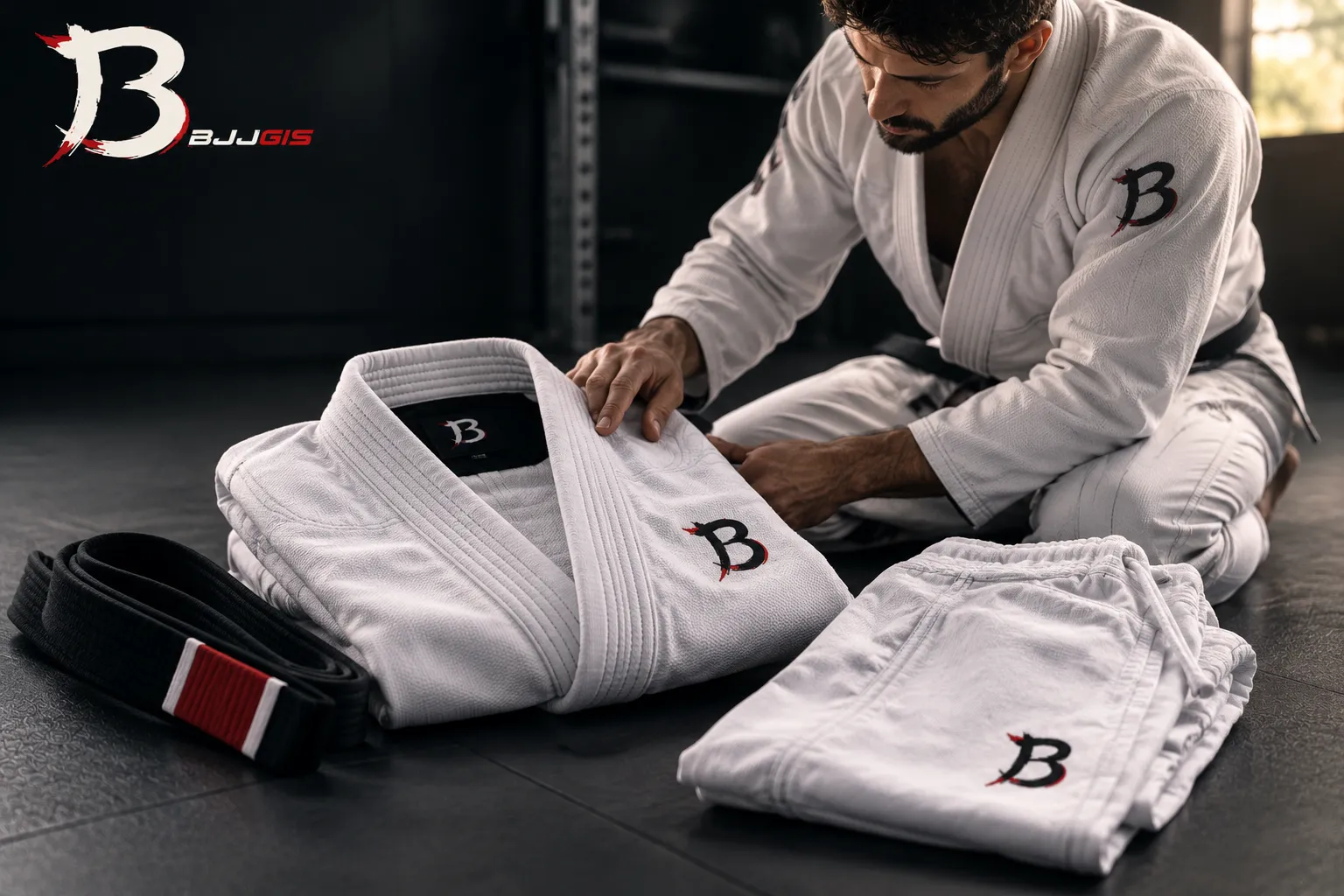
The collar takes more gripping than any other part of the gi. A good collar feels firm, springs back when squeezed, and is stitched to the lapel with several even rows. Many modern gis use a foam or rubber core inside the collar. Check for any separation where the collar meets the jacket; even a small gap on a new gi is a warning sign.
Stitching and Reinforcement
Look at the shoulders, underarms, sleeve cuffs, and skirt. Quality gis use multiple rows of stitching on stress seams and bartacks, small dense stitch clusters, where seams end. Single stitching on a load-bearing seam, loose threads, or wavy stitch lines suggest weak quality control.
Pants, Knees, and Drawstring
Gi pants usually fail at the knees and crotch first. Check for a reinforced knee area that extends above and below the kneecap, a gusset in the crotch, and securely stitched drawstring loops. A rope-style drawstring generally holds a knot better than a thin flat one.
Finishing and Symmetry
Hold the jacket by the collar. The sleeves should hang evenly, hems should be straight, and there should be no raw fabric edges. Patches and labels should be neatly stitched, not just ironed on. Asymmetry and messy finishing usually point to rushed cutting and sewing.
Signs of a Trustworthy BJJ Gi Brand Beyond the Gi
A Real Size System
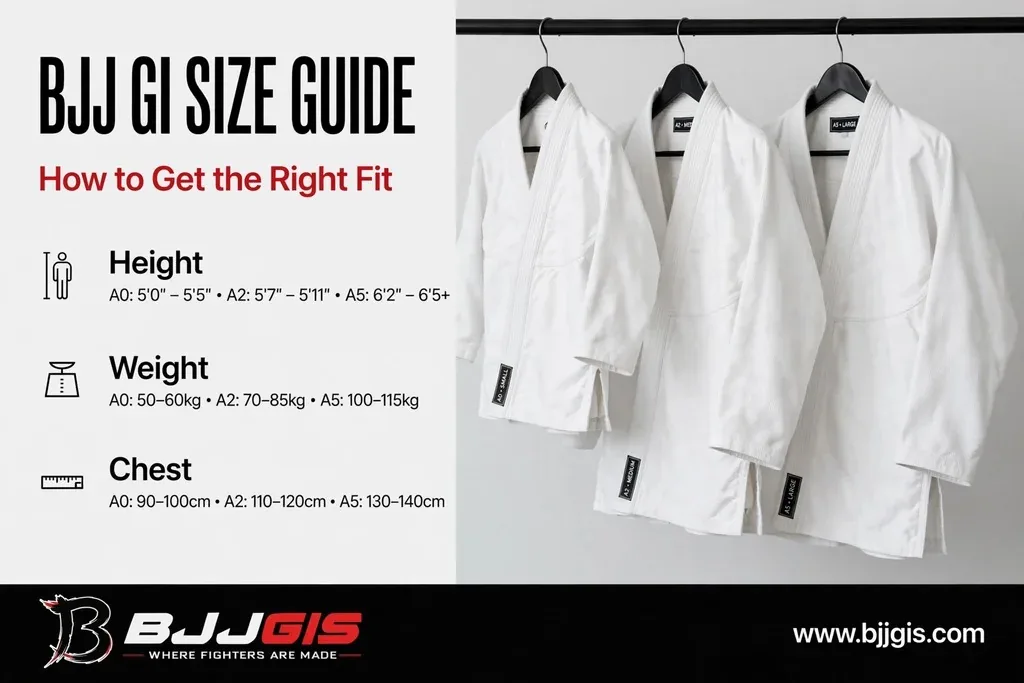
Gi sizes generally follow A-codes for adults (such as A0 to A6), sometimes with long or heavy variants, F-codes for women, and M-codes for kids. These codes are not standardized between brands, so a great brand publishes height and weight ranges for each size and explains how the gi is cut. See our BJJ gi size guide for how sizing works.
Honest Shrinkage and Care Information
Cotton gis can shrink, even when pre-shrunk. A reliable brand tells you whether the fabric is pre-shrunk, how to wash it, and what happens to returns after washing. Clear care guidance, like our guide on how to wash a BJJ gi without shrinking it, is a sign the brand expects customers to keep the gi for a long time.
Specific Claims, Not Slogans
"Premium" and "competition-grade" mean little on their own. Strong brands describe the actual weave, pant fabric, collar construction, and reinforcement. If a product page sounds technical but never explains what the material does on the mat, treat it with caution.
Support After the Sale
Great kimono brands make the boring parts easy: shipping times, size exchanges, restocks, and whether a belt is included. Being able to reorder the same gi in the same size a year later is part of quality, especially for academies.
How to Compare Brazilian Jiu Jitsu Gi Brands Before Buying
Lists of the "best BJJ kimono brands" are a useful starting point, but the right brand depends on your needs. Use this process to compare any shortlist:
- Define the use: first gi, daily training, competition, hot climate, kids, or academy uniforms.
- Read the size chart and fit notes for the exact model, not just the brand.
- Check the weave, pant fabric, collar, and reinforcement details.
- Confirm whether the gi is pre-shrunk and how it should be washed.
- Read the return and exchange policy before washing or wearing the gi.
- If you compete, check the exact model and color against current rules.
- Consider whether you will be able to reorder the same gi later.
A brand that passes these checks for your use case is worth shortlisting, whatever its size or price.
Share your fabric, sizing and branding requirements — we will prepare a sample built to a consistent standard.
Request a quote →Premium vs Value: What Are You Paying For?
A premium jiu jitsu gi may use specialty fabrics, more complex construction, limited designs, or smaller production runs. Those can be worth paying for, but price alone doesn't guarantee better fit, durability, or support. A well-made, clearly documented value gi is often the better choice for beginners and academy programs.
When comparing the best premium BJJ gi options with mid-range models, judge the specific features you'll actually use: fabric, fit options, collar construction, reinforcement, and care. If the extra cost buys only a logo or a limited colorway, it is a design choice, not a quality upgrade.
Best BJJ Gi for Competition: What to Check
The best BJJ gi for competition is one that fits well after washing and meets the current rules for your event. Federations such as the IBJJF regulate gi colors, fabric, collar dimensions, sleeve and pant length, and patch placement, and those rules change. Treat "IBJJF approved" or "competition legal" labels as a starting point, not a guarantee, and check the exact model, color, size, and patches against the latest rulebook. BJJ Gis produces competition gis for brands and teams, and the same checks apply.
Building Your Own BJJ Gi Brand
If you are an academy, retailer, or entrepreneur planning your own line, the qualities above become your product requirements.
Define Your Position
Decide who the gi is for: beginners, competitors, hot-climate training, kids, women, or premium buyers. That decision drives weave, weight, cut, color options, and price point. Trying to be everything in the first collection usually leads to too many sizes and colors to manage.
Choose a Manufacturer Carefully
Ask potential manufacturers about fabric sourcing, pre-shrinking, collar construction, size grading, sampling, quality inspection, and reorder consistency. You can work from your own tech pack through an OEM/ODM production arrangement, or start from existing patterns under a private label program.
Sampling and Approval
Never approve bulk production from photos alone. Order physical samples in several sizes.
Wash and Wear Test
Measure each sample, wash it using the care instructions you plan to print, and measure again. Then train in it for several sessions and inspect the collar, seams, and knees.
Keep a Golden Sample
Store one approved sample with its measurements and color reference. It becomes the benchmark for checking every future batch.
Plan for Consistency
Customers notice when a reorder fits differently or the blue is slightly off. Agree on size specs, color references, and inspection standards with your manufacturer before the first order, and compare each new batch with your golden sample.
Branding, Labels, and Packaging
Your branding should be as durable as the gi. Decide on gi embroidery, patches, or both; our woven vs embroidered vs PVC patches guide compares the options. Include a clear size chart and care instructions with your labels and packaging, and confirm labeling requirements for each country you sell in.
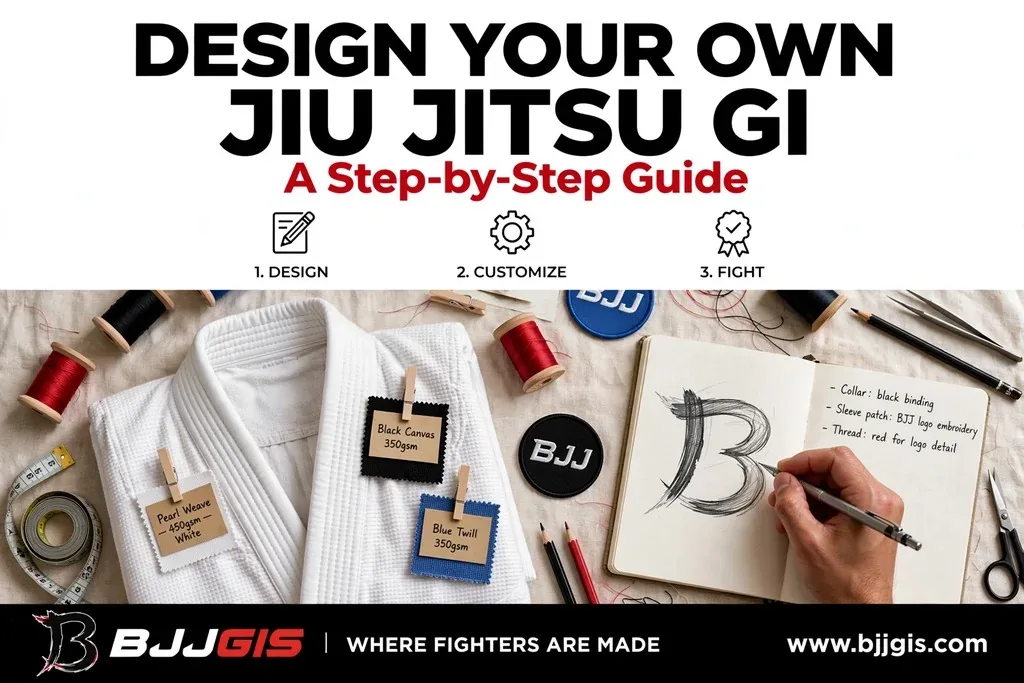
For a step-by-step look at choosing fabric, colors, and logo placement, see our guide to designing your own jiu jitsu gi. BJJ Gis is a custom BJJ gi manufacturer based in Sialkot, Pakistan, producing gis for brands and academies in the United States and worldwide.
Final Thoughts
A great BJJ gi brand isn't defined by price or hype. It is defined by gis that fit as described, survive regular training, shrink predictably, and arrive the same way every time you reorder. For buyers, judge the collar, stitching, reinforcement, size system, and care guidance before the logo. For anyone building a brand, those same details become your product standard.
Planning your own gi line or academy uniform? Request a quote from BJJ Gis with your fabric, sizing, and branding requirements, or message our team on WhatsApp to discuss samples and production.